
Interconnect user charge, which was the bone of contention between cellular and wireless in local loop players, would now be implemented with effect from May 1 instead of April 1
Communications and IT Minister Arun Shourie on Thursday said Government would not get into an industry crossfire on wireless in local loop issue.\n\n
Ending a month-long stalemate over interconnectivity, Telecom Regulatory Authority of India on Thursday directed Bharti to allow its network for the calls originating from Tata Teleservices' wireless in loop-based limited mobile services.
The cellular operators criticised the majority judgement of the TDSAT, which had permitted the WLL services, saying there was no reason given by the two judges to justify their views which were contrary to those of the TDSAT chairman.
Three telecom giants, Mahanagar Telephone Nigam, Videsh Sanchar Nigam and Telecommunications Consultants India Ltd have formed a joint venture and got licence to offer basic telephony.
Telecom Dispute Settlement and Appellate Tribunal on Wednesday sought the views of cellular operators regarding the alleged loss to their revenues on account of limited mobility services.

According to a study, the change in frequency for transmitting mobile signals could cost the telcos over Rs 1 lakh crore (Rs 1 trillion) cumulatively.
Its legal opinion on the judgment makes it clear that the mobility of WLL operators has to be restricted to the local calling area or the short distance charging area.
Amid the ongoing controversy on Wireless in Local Loop services, the limited mobility base of BSNL, MTNL and private operators has risen to 1.49 million, as on March 31, 2003 against 660,000 subscribers in the previous month.
The wireless in local loop services will cost more as a result of the latest order by the Telecom Regulatory Authority of India to enhance the rates of basic telephones from April one.

A liberalised spectrum allows operators to use any technology to deliver services like 3G and 4G.
Government on Monday indicated the one-by-six scheme for assessing income tax will be looked into to include wireless in local loop-based mobile phones.

The Department of Telecom has put on block around 385 MHz of radiowaves in the 1800 MHz band, and 46 MHz in the 900 MHz band.

The uniform SUC, if implemented as per recommendations made by Telecom Regulatory Authority of India, will provide relief for mobile operators such as Airtel, Vodafone and Idea, but will increase rates for broadband wireless access spectrum holders like RJIL.

Bharti Airtel, Vodafone, Reliance Jio Infocomm and five other telecom firms will battle it out at the spectrum auction tomorrow, from which the government expects to garner at least Rs 11,300 crore (Rs 113 billion).

The judgment in the 2G case is a huge, huge, indictment of the criminal investigation and justice system, says R Jagannathan.

The auction started off with the 36th round this morning. At the end of 35 rounds on Friday, bids worth around Rs 54,600 crore had been received by the government.

According to rating agency Fitch, India can in the long run support five-six profitable telecom operators.
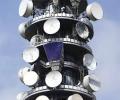
Its says reconsider lower reserve price, uniform usage charges; GSM players to bear the brunt.
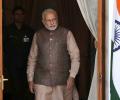
Ministers in the Narendra Modi government have been busy making presentations on their 100 days of work. But what these presentations do not mention is that decisions by ministers have been few, with plenty of papers and files moving to the Prime Minister's Office, which is increasingly emerging as a centralised clearance point, even for routine and ordinary issues. Though policy paralysis was a term used freely for the United Progressive Alliance regime, questions are now being raised about pending decisions across ministries and whether at least some ministers have turned redundant.

As per the initial proposal, DoT had sought 60 days time to start auction from the date cabinet decides on the spectrum base price and the NIA was to be issued after 15 days of the decision.

She was a Hollywood star, much sought after. She also helped invented technology which changed the world.

The telecom spectrum auction entered the 33rd round of bidding today after starting off from the Rs 52,689 crore (Rs 526. 89 billion) mark this morning.

What could be the reason for this swift change in less than four years of Mistry taking charge? People in the know said it was building up. The latest trigger was Tata Power's acquisition of Welspun Renewables' solar and power assets

The first new product to be developed and introduced under Chief Executive Officer Tim Cook's reign is a wearable device
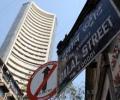
The Sensex ended below 28,000 for the second straight day at 27,869.
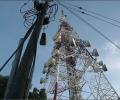
Telecom tower companies likely to invest around Rs 500 crore (Rs 50 billion) to enhance network.

The market breadth in BSE remains positive with 1,554 shares advancing and 1,196 shares declining.
The marketplace was simply not conducive to the extension and evolution of broadband networks, particularly for less dense rural markets, so connectivity and services suffered.

Telecom companies that bought spectrum in the 2G auction of November last year would lose around Rs 4,000 crore
